- TECH4SSD
- Posts
- AI Coding Assistants in 2026: Why Specialization is Key (No Single Winner) 🚀
AI Coding Assistants in 2026: Why Specialization is Key (No Single Winner) 🚀
Why specialized tools like Copilot, Cursor, and Claude Code are dominating, not one-size-fits-all solutions.
In partnership with

Forget the idea of one AI tool ruling them all! In 2026, the world of AI coding assistants is all about specialization. This is actually fantastic news for you, the developer, creator, or small business owner. It means you can pick the perfect AI superpower for your exact needs.
Your employees are connecting AI to everything. Now what?

ChatGPT and Claude don't just answer questions anymore. Employees are connecting them directly to Notion, Linear, Jira, and the rest of your stack. The AI can read, write, and take actions on company data. Most IT and security teams have no visibility into any of it.
Harmonic Security Connectors changes that. It sits inline with every AI-to-app connection, so you see each call, control what data moves, and block destructive actions before they happen. Employees notice nothing different.
See what's actually running across your business in a live demo.
The Market is Fragmented (and That's a Good Thing!)
The AI coding assistant landscape has matured beyond a single, dominant tool. Instead, we're seeing a rise of specialized assistants that excel in distinct developer workflows. This means the 'best' tool isn't universal; it depends entirely on your specific project, team, and coding style. Around 90% of developers use AI coding tools, but satisfaction often comes from finding the _right_ fit, not just the most popular one.
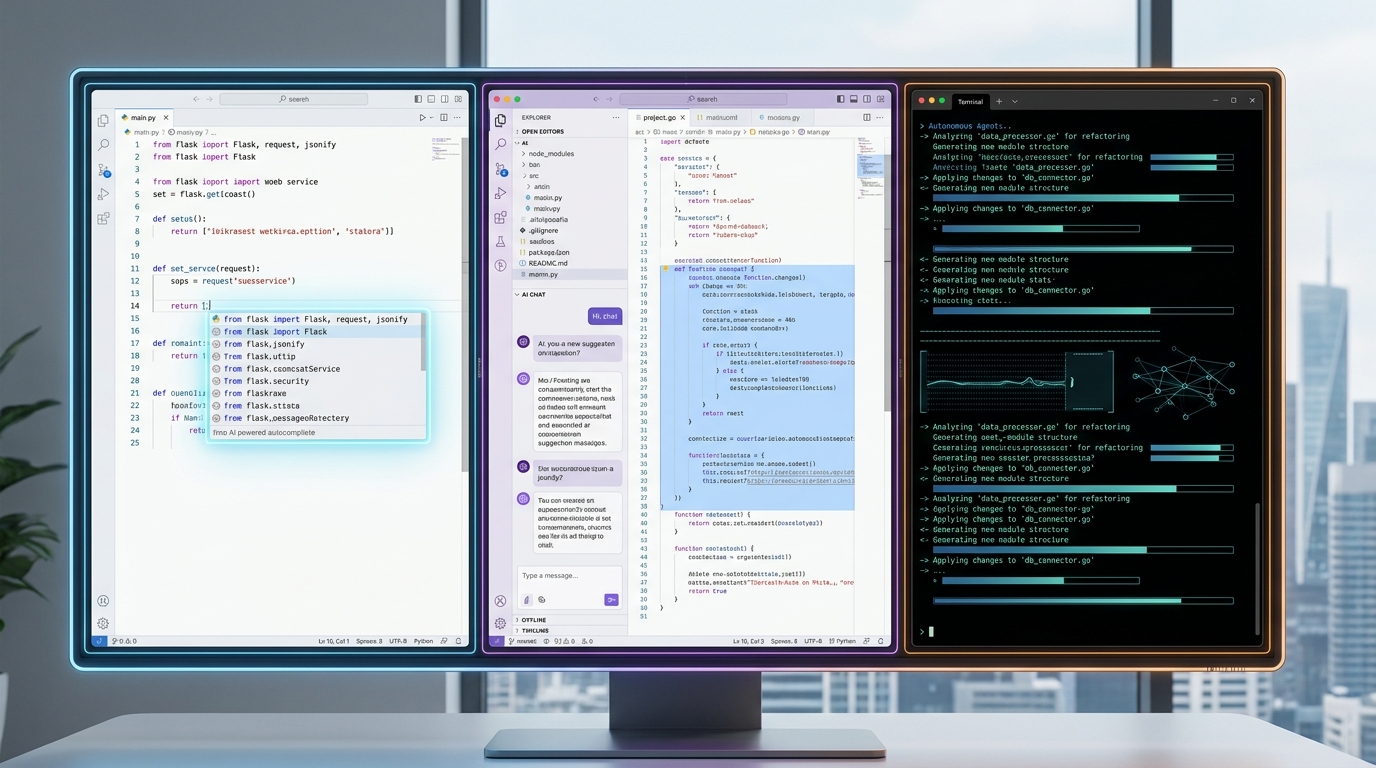
AI Coding Assistants in 2026: Why Specialization is Key (No Single Winner) 🚀
Meet the Big Three: Copilot, Cursor, & Claude Code
GitHub Copilot is your accessible sidekick, perfect for real-time code completion and boilerplate generation. It's often the first AI tool developers try due to its broad compatibility and integration with tools like VS Code.
Cursor offers an AI-native IDE experience (a VS Code fork), deeply integrating AI for interactive editing and complex multi-file changes via its "Composer" feature. It's for those who want AI baked into their entire coding environment.
Claude Code (especially with Opus 4.8) is the agent for heavy lifting. It excels in agentic, multi-step tasks, large refactors, and complex multi-file operations, often working best in terminal-native workflows. Senior developers frequently cite it as their 'most loved' tool for its strategic capabilities.
Beyond the Basics: Niche Tools & Pricing Strategies
The market extends beyond these three, with tools like Cline, Sourcegraph Cody, and Windsurf catering to even more specific niches. Pricing varies significantly: Copilot often has the lowest individual entry price, while Cursor and Claude Code offer higher tiers for advanced features and enterprise solutions. Choosing wisely means considering both cost and the value gained from specialized assistance.
Your employees are connecting AI to everything. Now what?

ChatGPT and Claude aren't just answering questions. Employees are connecting them directly to Notion, Linear, Jira, and the rest of your stack — with no security visibility into what data moves or what actions they take.
Harmonic Security gives your team the visibility to control it.
Key takeaways 👇
No single AI coding assistant wins in 2026; specialization is key.
GitHub Copilot is great for daily code completion and broad accessibility.
Cursor offers a deep, AI-native IDE for interactive, multi-file editing.
Claude Code (Opus 4.8) excels at complex, agentic refactoring tasks.
Consider mixing and matching tools to build your ultimate AI coding stack.
We broke it all down — steps, examples, and the full picture — in the complete guide. 👆
Forwarded this? Subscribe to Tech4SSD — practical AI tools and trends, explained for everyone. Free.
Reply